


Most consumer electronics companies compete on specs. Nothing competes on identity. Since launching its first product in 2021, the London-based brand has built a genuinely distinct presence in a market dominated by brands that have been iterating on the same visual formula for over a decade. The transparent back panels, the Glyph Interface, the dot-matrix typography, the stripped-back software every decision points toward a coherent philosophy rather than a spec sheet.
How It Started and Where It Stands

Nothing was founded in 2020 by Carl Pei, co-founder of OnePlus, alongside a small team with backgrounds spanning product design, software, and consumer hardware. The first product was the Ear (1), a pair of wireless earbuds with a transparent charging case, released in 2021. The Phone (1) followed in 2022, and with it came the design signature the brand has become known for: a see-through back panel revealing the internal components, combined with the Glyph Interface, a system of LED lighting strips that serve as a secondary display for notifications, timers, and progress indicators.
By 2024, Nothing had crossed a billion dollars in lifetime sales, more than doubled annual revenue to over $500 million, and sold over seven million devices globally. In India, it became the fastest-growing smartphone brand, with year-on-year growth exceeding 570 percent.
The Glyph Interface and What It Actually Does

The Glyph Interface is the most talked-about feature across the phone lineup, and it does more than look distinctive. The LED strips on the rear of the device can be assigned to specific contacts, so the phone can sit face-down and still communicate who is calling through a unique light pattern. Progress bars light up for active timers or incoming deliveries. Volume levels are visible without unlocking the screen. It is a deliberate attempt to make the phone less demanding of attention while keeping users informed, a design argument rather than a gimmick.
On the flagship Phone (3), Nothing took this further with the Glyph Matrix, replacing the individual LED strips with a full dot-matrix display on the rear, capable of rendering text, shapes, and more complex visualizations. The mid-range Phone (3a) and Phone (3a) Pro retain the classic Glyph strip system, while the Phone (3a) Lite introduces a simplified single-LED version, keeping the visual language consistent across price points.
Nothing OS: Software That Stays Out of the Way

Every Nothing device runs Nothing OS, a custom version of Android built around the same design principles as the hardware. The interface uses the brand’s signature dot-matrix font, avoids pre-installed apps and bloatware, and prioritizes clean, fast performance. The result is a software experience that most Android users would describe as closer to stock Android than anything from Samsung or Xiaomi, but with a more considered visual identity.
Nothing OS 4.0, based on Android 16, brought meaningful updates including Extra Dark Mode, improved multitasking through a redesigned Pop-up View, and a new Lock Glimpse feature that delivers dynamically curated wallpapers and personalized content on the lock screen. An AI feature called Essential Space, launched with the Phone (3a) series, acts as a personal organizer that allows natural language search through saved notes, images, and content, and can create calendar events directly from saved material.
The Product Range

The current lineup covers phones, audio, and watches, with products spread across a clear tier structure:
- Phone (3) is the flagship, featuring the Glyph Matrix and the most advanced hardware in the lineup
- Phone (3a) and Phone (3a) Pro are mid-range options with Snapdragon 7s Gen 3 chipsets, triple cameras, and the classic Glyph system
- Phone (4a) and Phone (4a) Pro represent the latest additions to the accessible end of the main lineup
- Ear (3), Ear (open), and the new Headphone (1) cover audio, with the over-ear headphones developed in partnership with KEF
- The CMF sub-brand, now spun off as its own company, handles the most affordable tier with devices like the CMF Phone 2 Pro, which features modular back covers and strong hardware at a significantly lower price
Nothing has made environmental responsibility a concrete part of its product development rather than a marketing claim. Every phone uses 100 percent recycled aluminum in the frame and over 50 percent bio-based or recycled plastic components. The company publishes carbon footprint data for each device it produces, which is unusual for a brand of its size and puts transparency at the product level as well as the literal hardware level.
A Brand with a Point of View
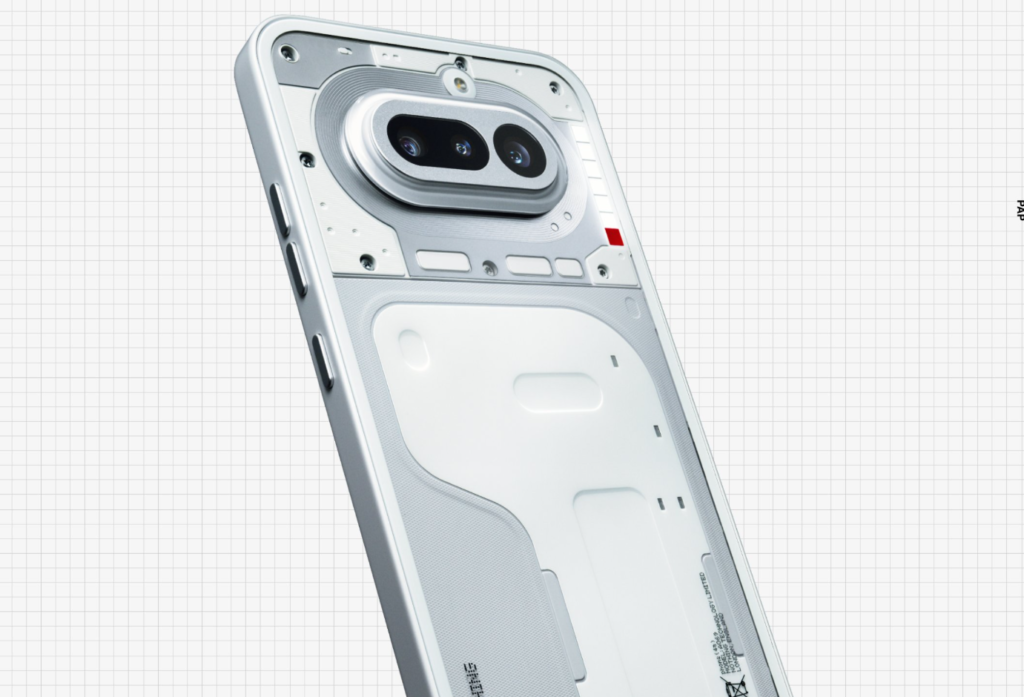
What makes Nothing unusual in the current landscape is that it has a clear position and sticks to it. The transparent aesthetic, the restrained software, the functional use of light, the consistent typographic identity none of it feels accidental. In a category where most brands differentiate through camera megapixels and processor benchmarks, Nothing has built something that a growing number of people find genuinely worth choosing, not just as a phone, but as an object they want to carry.